

Dáil Éireann schedule
-
Dáil Éireann resumes on
Tuesday, 30 April 2024 at 2:00 pm -
14:00
Leaders' Questions (Sinn Féin, Social Democrats, People Before Profit-Solidarity, Independent Group)15:04
Bills for Introduction: Fair Procedures in the Administration of Justice Bill 2024 — First Stage
15:09
Bills for Introduction: Commission on the Future of the Family Farm Bill 2024 — First Stage
16:00
Government Business: Automatic Enrolment Retirement Savings System Bill 2024 — Second Stage
-
09:58
Private Members' Business (People Before Profit-Solidarity): Motion re Disability Justice
14:04
Government Business- Motion re Proposed approval by Dáil Éireann of the proposal for a Council Decision on the signing, on behalf of the European Union, of an agreement between Canada and the European Union on the transfer and processing of Passenger Name Record data
- Motion re Proposed approval by Dáil Éireann of the proposal for a Council Decision on the conclusion, on behalf of the European Union, of an agreement between Canada and the European Union on the transfer and processing of Passenger Name Record data
17:28
Government Business: Automatic Enrolment Retirement Savings System Bill 2024 — Second stage (resumed)
-
09:00
Parliamentary Questions: Oral — Minister for Tourism, Culture, Arts, Gaeltacht, Sport and Media
12:00
Leaders' Questions (Sinn Féin, Social Democrats, People Before Profit-Solidarity, Regional Group)14:32
Private Members' Bill or Committee Report (alternating weekly): Motion re Report entitled "Report on the examination of recommendations of the Citizens' Assembly report on biodiversity loss"
-
Dáil Éireann resumes on
Tuesday, 30 April 2024 at 2:00 pm -
Dáil Éireann resumes on
Tuesday, 30 April 2024 at 2:00 pm -
Dáil Éireann resumes on
Tuesday, 30 April 2024 at 2:00 pm -
Dáil Éireann resumes on
Tuesday, 30 April 2024 at 2:00 pm -
14:01
Government Business: Acknowledgement and Apology to the Families and to the Victims of the Stardust Tragedy
17:53
Parliamentary Questions: Oral — Minister for Public Expenditure, National Development Plan Delivery and Reform
-
12:00
Leaders' Questions (Sinn Féin, Social Democrats, People Before Profit-Solidarity, Independent Group)14:05
Government Business: Statements on Agriculture - Update on Weather Related Supports for Farmers
-
12:00
Leaders' Questions (Sinn Féin, Labour Party, People Before Profit-Solidarity, Regional Group)13:49
Government Business: Civil Registration (Electronic Registration) Bill 2024 — Second Stage
18:18
Private Members' Bill or Committee Report (alternating weekly): Motion re Report entitled "Report on Politically Exposed Persons"
-
Dáil Éireann resumes on
Tuesday, 30 April 2024 at 2:00 pm -
Dáil Éireann resumes on
Tuesday, 30 April 2024 at 2:00 pm -
Dáil Éireann resumes on
Tuesday, 30 April 2024 at 2:00 pm -
Dáil Éireann resumes on
Tuesday, 30 April 2024 at 2:00 pm -
16:00
Government Business: Supports for Survivors of Residential Institutional Abuse Bill 2024 — Second Stage
17:41
Private Members' Business (Sinn Féin): Motion re Petrol and Diesel Excise Rate Increases
19:43
Parliamentary Questions: Oral — Minister for Children, Equality, Disability, Integration and Youth -
09:58
Private Members' Business (Rural Independent Group): Motion re European Union Migration and Asylum Pact
12:00
Leaders' Questions (Sinn Féin, Social Democrats, Regional Group, Rural Independent Group)14:49
Government Business: Supports for Survivors of Residential Institutional Abuse Bill 2024 — Second stage (resumed)
17:30
Government Business: Criminal Law (Sexual Offences and Human Trafficking) Bill 2023 — Report and Final Stages
-
10:30
Parliamentary Questions: Oral — Minister for Public Expenditure, National Development Plan Delivery and Reform12:00
Leaders' Questions (Sinn Féin, Social Democrats, People Before Profit-Solidarity, Rural Independent Group)18:12
Private Members' Bill or Committee Report (alternating weekly): Motion re Report entitled "Report on Offshore Renewable Energy"
-
No business is currently scheduled.
-
No business is currently scheduled.
-
No business is currently scheduled.
-
Dáil Éireann resumes on
Tuesday, 30 April 2024 at 2:00 pm
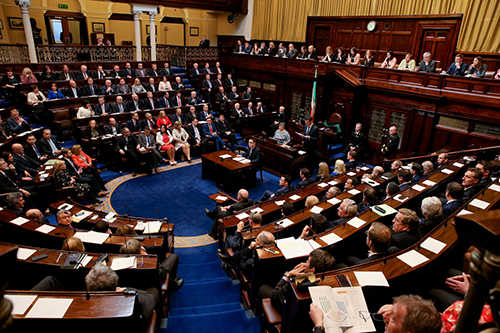
Seanad Éireann schedule
-
Seanad Éireann resumes on
Tuesday, 30 April 2024 at 1.00 pm -
17.30
Health (Termination of Pregnancy Services) (Safe Access Zones) Bill 2023 — Committee Stage (resumed)
-
12.00
Motion without debate: Motion regarding the New Pact on Asylum and Migration - Referral to Committee
15.00
Motion without debate: Motion of Instruction to Committee regarding the Gas (Amendment) Bill 2023
-
Seanad Éireann resumes on
Tuesday, 30 April 2024 at 1.00 pm -
Seanad Éireann resumes on
Tuesday, 30 April 2024 at 1.00 pm -
Seanad Éireann resumes on
Tuesday, 30 April 2024 at 1.00 pm -
Seanad Éireann resumes on
Tuesday, 30 April 2024 at 1.00 pm -
Seanad Éireann resumes on
Tuesday, 30 April 2024 at 1.00 pm -
14.30
Motions without debate:
- Motion regarding proposed approval by Seanad Éireann of the proposal of a Council Decision on the signing, on behalf of the European Union, of an agreement between Canada and the European Union, on the transfer and processing of Passenger Name Record data
- Motion regarding proposed approval by Seanad Éireann of the proposal of a Council Decision on the conclusion, on behalf of the European Union, of an agreement between Canada and the European Union, on the transfer processing of Passenger Name Record data
-
12.00
Motion without debate:
- Motion regarding Draft Planning and Development (Street Furniture Fees) Regulations 2024 - Fees for Tables and Chairs under Street Furniture licences
13.15
-
Seanad Éireann resumes on
Tuesday, 30 April 2024 at 1.00 pm -
Seanad Éireann resumes on
Tuesday, 30 April 2024 at 1.00 pm -
Seanad Éireann resumes on
Tuesday, 30 April 2024 at 1.00 pm -
Seanad Éireann resumes on
Tuesday, 30 April 2024 at 1.00 pm -
Seanad Éireann resumes on
Tuesday, 30 April 2024 at 1.00 pm -
12.45
Health (Termination of Pregnancy Services) (Safe Access Zones) Bill 2023 — Report and Final Stages
-
No business is currently scheduled
-
No business is currently scheduled
-
No business is currently scheduled
-
Seanad Éireann resumes on
Tuesday, 30 April 2024 at 1.00 pm
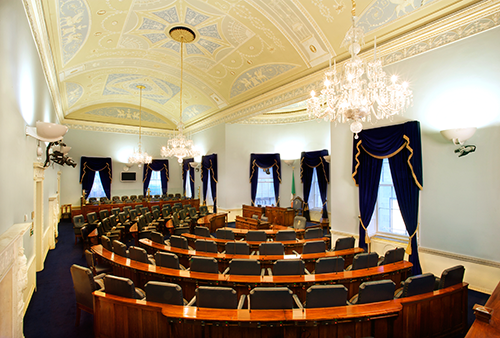
Schedule of meetings
-
No business currently scheduled.
-
11.00
15.30
Joint Committee on Environment and Climate Action
MS Teams Virtual Meeting
15.45
Seanad Public Consultation Committee
Room 4, LH
16.00
MS Teams Virtual Meeting
-
09.30
11.00
Joint Committee on Public Petitions and the Ombudsmen
MS Teams Virtual Meeting
12.00
Joint Committee on Tourism, Culture, Arts, Sport and Media
MS Teams Virtual Meeting
14.00
Joint Committee on Finance, Public Expenditure and Reform, and Taoiseach
MS Teams Virtual Meeting
16.45
17.00
Joint Committee on Disability Matters
MS Teams Virtual Meeting
-
10.30
Joint Committee on Key Issues affecting the Traveller Community (2023)
MS Teams Virtual Meeting
11.00
Business Committee (Dáil Éireann)
MS Teams Virtual Meeting
-
No business currently scheduled.
-
No business currently scheduled.
-
No business currently scheduled.
-
No business currently scheduled.
-
11.00
11.00
Joint Committee on Housing, Local Government and Heritage
MS Teams Virtual Meeting
13.30
Working Group of Committee Cathaoirligh
MS Teams Virtual Meeting
15.00
15.30
Joint Committee on Environment and Climate Action
MS Teams Virtual Meeting
16.00
Joint Committee on Transport and Communications
MS Teams Virtual Meeting
16.00
MS Teams Virtual Meeting
-
09.30
12.30
Joint Committee on Finance, Public Expenditure and Reform, and Taoiseach
MS Teams Virtual Meeting
17.00
Joint Committee on Disability Matters
MS Teams Virtual Meeting
-
10.30
11.00
Business Committee (Dáil Éireann)
MS Teams Virtual Meeting
-
No business currently scheduled.
-
No business currently scheduled.
-
No business currently scheduled.
-
No business currently scheduled.
-
No business currently scheduled.
-
No business currently scheduled.
-
No business currently scheduled.
-
No business currently scheduled.
-
No business currently scheduled.
-
No business currently scheduled.
-
No business currently scheduled.
Oireachtas TV
-
01:00
The Geneva Window. Through A Glass Darkly
The story of stained-glass artist Harry Clark's ill-fated masterpiece, commissioned by the Free State Government to be presented to the International Labour Court in Geneva in 1930 – only for it to be shelved once ministers saw its contents. Presented by Ardal O'Hanlon.02:00
Dáil Éireann Replay
Replay of current Dáil Éireann sittings07:25
Geilleagar na Gaeltachta: Conas Mionchomhlachtaí a Fhorbairt i gCeantair Thuaithe
Mar chuid d’imeachtaí Sheachtain na Gaeilge 2024, d’eagraigh Comhchoiste na Gaeilge, na Gaeltachta agus Phobal Labhartha na Gaeilge comhdháil i gComhairle Contae na Gaillimhe ar an 8 Márta 2024 ar an ábhar: “Geilleagar na Gaeltachta: conas mionchomhlachtaí a fhorbairt i gceantair thuaithe”09:55
Joint Committee on Enterprise, Trade and Employment
Members can examine key legislation and policy areas under the remit of these Departments and their agencies11:35
Dáil na nÓg
Recorded in Leinster House on 27th March 202413:15
Leaders' Questions Thursday
Leaders Questions, where Party Leaders and the Leaders of recognised technical groups can put a question to an Taoiseach without prior notice.
(ISL)14:00
European Youth Parliament Ireland 27th National Conference
Coverage of the general assembly of the EYP Ireland 27th National Conference, recorded in Leinster House in April 202418:30
Joint Committee on Public Petitions and the Ombudsmen
Members can investigate and identify improvements in the delivery of public services to citizens and to receive petitions from the public.20:05
Oireachtas TV Debates - March 2024
[SL]Discussing the process and constitutional implications involved in a Taoiseach’s resignation. Plus the challenges and pressures faced by politicians in the digital age
(ISL)21:00
Around the Houses - March 2024
A look back on some of the main events in the past month.
(ISL)22:00
Priority Questions
Questions asked of Ministers in the Dáil23:20
European Youth Parliament Ireland 27th National Conference
Coverage of the general assembly of the EYP Ireland 27th National Conference, recorded in Leinster House in April 2024 -
03:45
Select Committee on Housing, Local Government and Heritage
Members can examine key legislation and policy areas under the remit of the Department and its agencies07:15
Joint Committee on Tourism, Culture, Arts, Sport and Media
Members can examine key legislation and policy areas under the remit of the Department and its agencies10:00
Around the Houses - March 2024
A look back on some of the main events in the past month.
(ISL)11:10
Dáil na nÓg
Recorded in Leinster House on 27th March 202412:30
Oireachtas TV Debates - March 2024
[SL]Discussing the process and constitutional implications involved in a Taoiseach’s resignation. Plus the challenges and pressures faced by politicians in the digital age
(ISL)13:00
Live Seanad Éireann
Live Broadcast from the Seanad.14:00
Live - Leaders' Questions
When Party Leaders and Leaders of recognised technical groups can put a question to an Taoiseach without prior notice
(ISL)14:35
Order of Business Live
Where the business to be transacted in the Dáil for the coming week is introduced and to agreed by the House.15:05
Live Questions to an Taoiseach
Where the Taoiseach, as Head of a Government Department, answers questions on those areas for which he has administrative responsibility.
(ISL)15:50
Live Government Business
Legislation, Motions or Statements proposed by the Government17:30
Live Private Members' Business
Private Members Business is time set aside to debate a motion or legislation which is proposed by a party in opposition.19:30
Live Parliamentary Questions
When Deputies have an opportunity to receive replies to questions submitted by them to a Member of the Government on matters for which they have administrative responsibility21:05
Live Topical Issues
When Deputies who have raised a matter which is topical either nationally or within their constituency are answered by a Member of the Government.22:30
Leaders' Questions Replay
Leaders Questions, where Party Leaders and the Leaders of recognised technical groups can put a question to an Taoiseach without prior notice
(ISL)23:15
Seanad Éireann Replay
Replay of current Seanad Éireann sittings -
02:20
Oireachtas Replay
Replay of selected content from the Houses of the Oireachtas04:50
Oireachtas Replay
Replay of selected content from the Houses of the Oireachtas08:00
Oireachtas Replay
Replay of selected content from the Houses of the Oireachtas09:10
Live Topical Issues
When Deputies who have raised a matter which is topical either nationally or within their constituency are answered by a Member of the Government.10:00
Live Private Members' Business
Private Members Business is time set aside to debate a motion or legislation which is proposed by a party in opposition.12:00
Live - Leaders' Questions
When Party Leaders and Leaders of recognised technical groups can put a question to an Taoiseach without prior notice
(ISL)12:35
Live - Questions on Policy or Legislation
Questions can be on the taking of business which has been promised, matters of public policy or administration, making of secondary legislation, or when Bills or other documents needed in the House will be circulated
(ISL)13:05
Live Seanad Éireann
Live Broadcast from the Seanad.14:05
Live Government Business
Legislation, Motions or Statements proposed by the Government17:30
Live - Joint Committee on Disability Matters
Members can examine key legislation and policy areas under the remit of the Department and its agencies.
(ISL)20:30
Live - Select Committee on Housing, Planning & Local Government
Coverage of the committees' scrutiny of the legislative and policy areas of the Department and the offices under its remit.21:15
Leaders' Questions Replay
Leaders Questions, where Party Leaders and the Leaders of recognised technical groups can put a question to an Taoiseach without prior notice
(ISL)22:00
Seanad Éireann Replay
Replay of current Seanad Éireann sittings -
04:00
Oireachtas Replay
Replay of selected content from the Houses of the Oireachtas09:00
Live Parliamentary Questions
When Deputies have an opportunity to receive replies to questions submitted by them to a Member of the Government on matters for which they have administrative responsibility10:30
Live Parliamentary Questions
When Deputies have an opportunity to receive replies to questions submitted by them to a Member of the Government on matters for which they have administrative responsibility12:00
Live - Leaders' Questions
When Party Leaders and Leaders of recognised technical groups can put a question to an Taoiseach without prior notice
(ISL)12:35
Live - Questions on Policy or Legislation
Questions can be on the taking of business which has been promised, matters of public policy or administration, making of secondary legislation, or when Bills or other documents needed in the House will be circulated
(ISL)13:05
Oireachtas Replay
Replay of selected content from the Houses of the Oireachtas13:45
Live Government Business
Legislation, Motions or Statements proposed by the Government16:10
Live Topical Issues
When Deputies who have raised a matter which is topical either nationally or within their constituency are answered by a Member of the Government.16:55
Live - Dáil Éireann Motion
Motion on a Committee Report18:30
Leaders' Questions Replay
Leaders Questions, where Party Leaders and the Leaders of recognised technical groups can put a question to an Taoiseach without prior notice
(ISL)19:15
Seanad Éireann Replay
Replay of current Seanad Éireann sittings -
00:00
Oireachtas Replay
Replay of selected content from the Houses of the Oireachtas06:00
Oireachtas Replay
Replay of selected content from the Houses of the Oireachtas10:00
Joint Committee on Children, Equality, Disability, Integration and Youth
Members can examine key legislation and policy areas under the remit of the Department and its agencies12:20
Select Committee on Housing, Local Government and Heritage
Members can examine key legislation and policy areas under the remit of the Department and its agencies14:30
Comhchoiste na Gaeilge, na Gaeltachta agus Phobal Labhartha
Members can examine key legislation and policy areas under the remit of the Department and its agencies17:00
Topical Issues Tuesday
When Deputies who have raised a matter which is topical either nationally or within their constituency are answered by a Member of the Government.18:00
Topical Issues Wednesday
Where Deputies who have raised a matter which is topical either nationally or within their constituency are answered by a Member of the Government18:35
PACE – The Irish Presidency
Documentary following members of the Irish delegation to the Council of Europe in Strasbourg, during the last meeting of the Irish Presidency of the Council in Oct 2022
(ISL)19:05
Topical Issues Thursday
When Deputies who have raised a matter which is topical either nationally or within their constituency are answered by a Member of the Government.20:00
Seanad Commencement Matters
Coverage of the debates on matters submitted by Senators which is topical either nationally or local to a specific area and which is replied to by a Member of the Government
(ISL)22:30
Joint Committee on Disability Matters
Members can examine key legislation and policy areas under the remit of the Department and its agencies
(ISL) -
00:30
Select Committee on Housing, Local Government and Heritage
Members can examine key legislation and policy areas under the remit of the Department and its agencies05:00
Joint Committee on Justice
Members can examine key legislation and policy areas under the remit of the Department and its agencies06:45
Joint Committee on Health
Members can examine key legislation and policy areas under the remit of the Department and its agencies10:00
Joint Committee on Public Petitions and the Ombudsmen
Members can investigate and identify improvements in the delivery of public services to citizens and to receive petitions from the public.11:30
Seanad Commencement Matters
Coverage of the debates on matters submitted by Senators which is topical either nationally or local to a specific area and which is replied to by a Member of the Government
(ISL)13:45
Statements from the Seanad
Coverage of Statements made in the Seanad on specific matters of national or international interest.15:30
Seanad Private Members' Business
Coverage of the business proposed by a Senator and taken in Private Members Time. The business can be either a motion or a piece of legislation.16:30
Joint Committee on Social Protection, Community and Rural Development and the Islands
Coverage of the committees' scrutiny of the legislative and policy areas of the Department and the offices under its remit.18:50
Joint Committee on Agriculture, Food and the Marine
Members can examine key legislation and policy areas under the remit of the Department and its agencies21:00
Leaders' Questions Tuesday
Leaders Questions, where Party Leaders and the Leaders of recognised technical groups can put a question to an Taoiseach without prior notice
(ISL)21:45
Leaders' Questions Wednesday
Leaders Questions, where Party Leaders and the Leaders of recognised technical groups can put a question to an Taoiseach without prior notice
(ISL)22:30
Leaders' Questions Thursday
Leaders Questions, where Party Leaders and the Leaders of recognised technical groups can put a question to an Taoiseach without prior notice.
(ISL)23:15
Joint Committee on Transport and Communications
Members can examine key legislation and policy areas under the remit of the Department and its agencies -
01:00
Select Committee on Budgetary Oversight
Coverage of the committees' scrutiny of the budgetary formation process especially the macro-economic and fiscal issues that influence the budgetary process02:15
Joint Committee on Transport and Communications
Members can examine key legislation and policy areas under the remit of the Department and its agencies06:15
PACE: Parliamentary Assembly of the Council of Europe
This behind-the-scenes documentary takes a look at the work of the Parliamentary Assembly of the Council of Europe and the Irish delegation’s role06:45
Joint Committee on the Implementation of the Good Friday Agreement
Members can examine key legislation and policy areas under the remit of the Department and its agencies08:30
Joint Committee on Disability Matters
Members can examine key legislation and policy areas under the remit of the Department and its agencies
(ISL)10:30
Parliamentary Questions
When Deputies who submitted questions to a Minister of Government on issues for which that Minister has specific administrative responsibility receive the replies in the Chamber15:00
Leaders' Questions Tuesday
Leaders Questions, where Party Leaders and the Leaders of recognised technical groups can put a question to an Taoiseach without prior notice
(ISL)15:45
Leaders' Questions Wednesday
Leaders Questions, where Party Leaders and the Leaders of recognised technical groups can put a question to an Taoiseach without prior notice
(ISL)16:30
Leaders' Questions Thursday
Leaders Questions, where Party Leaders and the Leaders of recognised technical groups can put a question to an Taoiseach without prior notice.
(ISL)17:15
Tionól - Eipeasóid 1
An phaindéim Covid 19 a bheidh faoi chaibidil sa chlár nua díospóireachta seo ar Oireachtas TV18:00
Questions - Taoiseach: Tuesday
The Taoiseach answers questions put to him by Members on legislative or policy areas for which he has specific administrative responsibility.
(ISL)18:45
Joint Committee on Enterprise, Trade and Employment
Members can examine key legislation and policy areas under the remit of these Departments and their agencies20:00
Around the Houses - March 2024
A look back on some of the main events in the past month.
(ISL)21:00
Joint Committee on Health
Members can examine key legislation and policy areas under the remit of the Department and its agencies23:55
Select Committee on Housing, Local Government and Heritage
Members can examine key legislation and policy areas under the remit of the Department and its agencies -
06:00
European Parliament Debates
Coverage of debates held in the European Parliament07:00
Joint Committee on Children, Equality, Disability, Integration and Youth
Members can examine key legislation and policy areas under the remit of the Department and its agencies09:30
Joint Committee on Social Protection, Community and Rural Development and the Islands
Coverage of the committees' scrutiny of the legislative and policy areas of the Department and the offices under its remit.12:00
Leaders' Questions Tuesday
Leaders Questions, where Party Leaders and the Leaders of recognised technical groups can put a question to an Taoiseach without prior notice
(ISL)12:45
Leaders' Questions Wednesday
Leaders Questions, where Party Leaders and the Leaders of recognised technical groups can put a question to an Taoiseach without prior notice
(ISL)13:30
Leaders' Questions Thursday
Leaders Questions, where Party Leaders and the Leaders of recognised technical groups can put a question to an Taoiseach without prior notice.
(ISL)14:15
Smiling Public Man
A special event to commemorate the anniversary of the receipt of the Nobel Prize in Literature by Senator W.B. Yeats in 192315:00
Private Members' Business
Coverage of the business selected by a Party or Technical Group in opposition and taken in Private Members Time. The business can be either a motion or a piece of legislation.17:10
Private Members' Business
Coverage of the business selected by a Party or Technical Group in opposition and taken in Private Members Time. The business can be either a motion or a piece of legislation.19:10
Private Members' Business
Coverage of the business selected by a Party or Technical Group in opposition and taken in Private Members Time. The business can be either a motion or a piece of legislation.20:30
Oireachtas TV Debates - March 2024
[SL]Discussing the process and constitutional implications involved in a Taoiseach’s resignation. Plus the challenges and pressures faced by politicians in the digital age
(ISL)21:00
Around the Houses - March 2024
A look back on some of the main events in the past month.
(ISL)22:00
Priority Questions
Questions asked of Ministers in the Dáil23:50
Committee of Public Accounts
This committee works to ensure accountability and transparency in the way Government departments and agencies allocate, spend and manage their finances -
03:35
Comhchoiste na Gaeilge, na Gaeltachta agus Phobal Labhartha
Members can examine key legislation and policy areas under the remit of the Department and its agencies06:00
Joint Committee on Justice
Members can examine key legislation and policy areas under the remit of the Department and its agencies07:30
Topical Issues Tuesday
When Deputies who have raised a matter which is topical either nationally or within their constituency are answered by a Member of the Government.08:20
Topical Issues Wednesday
Where Deputies who have raised a matter which is topical either nationally or within their constituency are answered by a Member of the Government09:00
Topical Issues Thursday
When Deputies who have raised a matter which is topical either nationally or within their constituency are answered by a Member of the Government.10:00
Around the Houses - March 2024
A look back on some of the main events in the past month.
(ISL)11:00
Live - Joint Committee on Environment and Climate Action
Coverage of the committees' scrutiny of the legislative and policy areas of the Departments and the offices under their remit.14:00
Acknowledgement and apology to the families and to the victims of the Stardust Tragedy
Acknowledgement and Apology to the Families and to the Victims of the Stardust Tragedy
(ISL)17:55
Live Parliamentary Questions
When Deputies have an opportunity to receive replies to questions submitted by them to a Member of the Government on matters for which they have administrative responsibility19:25
Live Parliamentary Questions
When Deputies have an opportunity to receive replies to questions submitted by them to a Member of the Government on matters for which they have administrative responsibility20:55
Live Topical Issues
When Deputies who have raised a matter which is topical either nationally or within their constituency are answered by a Member of the Government.22:00
Seanad Éireann Replay
Replay of current Seanad Éireann sittings -
02:20
Oireachtas Replay
Replay of selected content from the Houses of the Oireachtas04:50
Oireachtas Replay
Replay of selected content from the Houses of the Oireachtas08:00
Oireachtas Replay
Replay of selected content from the Houses of the Oireachtas09:30
Live - Joint Committee on Health
Coverage of the committees' scrutiny of the legislative and policy areas of the Department and the offices under its remit.12:00
Live - Leaders' Questions
When Party Leaders and Leaders of recognised technical groups can put a question to an Taoiseach without prior notice
(ISL)12:35
Live - Questions on Policy or Legislation
Questions can be on the taking of business which has been promised, matters of public policy or administration, making of secondary legislation, or when Bills or other documents needed in the House will be circulated
(ISL)13:05
Live Seanad Éireann
Live Broadcast from the Seanad.14:05
Live Government Business
Legislation, Motions or Statements proposed by the Government21:30
Live Dáil Matters for Decision
A period set aside for the taking of votes on motions that have been previously debated.22:30
Leaders' Questions Replay
Leaders Questions, where Party Leaders and the Leaders of recognised technical groups can put a question to an Taoiseach without prior notice
(ISL)23:15
Seanad Éireann Replay
Replay of current Seanad Éireann sittings -
04:00
Oireachtas Replay
Replay of selected content from the Houses of the Oireachtas09:00
Live Parliamentary Questions
When Deputies have an opportunity to receive replies to questions submitted by them to a Member of the Government on matters for which they have administrative responsibility10:30
Live Parliamentary Questions
When Deputies have an opportunity to receive replies to questions submitted by them to a Member of the Government on matters for which they have administrative responsibility12:00
Live - Leaders' Questions
When Party Leaders and Leaders of recognised technical groups can put a question to an Taoiseach without prior notice
(ISL)12:35
Live - Questions on Policy or Legislation
Questions can be on the taking of business which has been promised, matters of public policy or administration, making of secondary legislation, or when Bills or other documents needed in the House will be circulated
(ISL)13:05
Live Seanad Éireann
Live Broadcast from the Seanad.13:45
Live Government Business
Legislation, Motions or Statements proposed by the Government17:30
Live Topical Issues
When Deputies who have raised a matter which is topical either nationally or within their constituency are answered by a Member of the Government.18:20
Dáil Éireann Motion
Motion on a Committee Report19:45
Leaders' Questions Replay
Leaders Questions, where Party Leaders and the Leaders of recognised technical groups can put a question to an Taoiseach without prior notice
(ISL)20:30
Seanad Éireann Replay
Replay of current Seanad Éireann sittings -
00:00
Oireachtas Replay
Replay of selected content from the Houses of the Oireachtas06:00
Oireachtas Replay
Replay of selected content from the Houses of the Oireachtas10:30
Joint Committee on Children, Equality, Disability, Integration and Youth
Members can examine key legislation and policy areas under the remit of the Department and its agencies12:10
Joint Committee on Education, Further and Higher Education, Research, Innovation and Science
Members can examine key legislation and policy areas under the remit of the Department and its agencies14:10
Joint Committee on Housing, Local Government and Heritage
Members can examine key legislation and policy areas under the remit of the Department and its agencies17:00
Topical Issues Tuesday
When Deputies who have raised a matter which is topical either nationally or within their constituency are answered by a Member of the Government.18:00
Topical Issues Wednesday
Where Deputies who have raised a matter which is topical either nationally or within their constituency are answered by a Member of the Government19:00
Topical Issues Thursday
When Deputies who have raised a matter which is topical either nationally or within their constituency are answered by a Member of the Government.20:00
Seanad Commencement Matters
Coverage of the debates on matters submitted by Senators which is topical either nationally or local to a specific area and which is replied to by a Member of the Government
(ISL)22:00
Joint Committee on Disability Matters
Members can examine key legislation and policy areas under the remit of the Department and its agencies
(ISL)23:30
European Parliament Debates
Coverage of debates held in the European Parliament -
01:50
European Parliament Debates
Coverage of debates held in the European Parliament03:30
European Youth Parliament Ireland 27th National Conference
Coverage of the general assembly of the EYP Ireland 27th National Conference, recorded in Leinster House in April 202408:00
Dáil Day One
A fascinating film highlighting the events prior to and the key people involved in the lead up to the first Dáil on 21st January 1919
(ISL)08:30
Joint Committee on Justice
Members can examine key legislation and policy areas under the remit of the Department and its agencies11:30
Seanad Commencement Matters
Coverage of the debates on matters submitted by Senators which is topical either nationally or local to a specific area and which is replied to by a Member of the Government
(ISL)13:30
Seanad Private Members' Business
Coverage of the business proposed by a Senator and taken in Private Members Time. The business can be either a motion or a piece of legislation.15:15
Acknowledgement and Apology to the Families and to the Victims of the Stardust Tragedy
Acknowledgement and Apology to the Families and to the Victims of the Stardust Tragedy
(ISL)18:40
Joint Committee on Environment and Climate Action
Members can examine key legislation and policy areas under the remit of the Department and its agencies21:45
Leaders' Questions Wednesday
Leaders Questions, where Party Leaders and the Leaders of recognised technical groups can put a question to an Taoiseach without prior notice
(ISL)22:30
Leaders' Questions Thursday
Leaders Questions, where Party Leaders and the Leaders of recognised technical groups can put a question to an Taoiseach without prior notice.
(ISL)23:15
Comhchoiste na Gaeilge, na Gaeltachta agus Phobal Labhartha
Members can examine key legislation and policy areas under the remit of the Department and its agencies -
02:00
Select Committee on Finance, Public Expenditure and Reform
Coverage of the committees' scrutiny of the legislative and policy areas of the Departments and the offices under their remit.03:50
European Youth Parliament Ireland 27th National Conference
Coverage of the general assembly of the EYP Ireland 27th National Conference, recorded in Leinster House in April 202408:15
Joint Committee on Foreign Affairs and Defence
Members can examine key legislation and policy areas under the remit of the Department and its agencies09:15
Joint Committee on Enterprise, Trade and Employment
Members can examine key legislation and policy areas under the remit of these Departments and their agencies10:30
Parliamentary Questions
When Deputies who submitted questions to a Minister of Government on issues for which that Minister has specific administrative responsibility receive the replies in the Chamber16:45
Leaders' Questions Wednesday
Leaders Questions, where Party Leaders and the Leaders of recognised technical groups can put a question to an Taoiseach without prior notice
(ISL)17:30
Leaders' Questions Thursday
Leaders Questions, where Party Leaders and the Leaders of recognised technical groups can put a question to an Taoiseach without prior notice.
(ISL)18:15
Joint Committee on Agriculture, Food and the Marine
Members can examine key legislation and policy areas under the remit of the Department and its agencies20:00
Around the Houses - March 2024
A look back on some of the main events in the past month.
(ISL)21:00
Oireachtas TV Debates - European Parliament April 2024
OTV Debates presents an EU special from the April Plenary in Strasbourg, ahead of the 2024 European elections
(ISL)22:15
Joint Committee on Tourism, Culture, Arts, Sport and Media
Members can examine key legislation and policy areas under the remit of the Department and its agencies -
01:10
Joint Committee on Public Petitions and the Ombudsmen
Members can investigate and identify improvements in the delivery of public services to citizens and to receive petitions from the public.03:00
European Parliament Debates
Coverage of debates held in the European Parliament03:45
Joint Committee on Transport and Communications
Members can examine key legislation and policy areas under the remit of the Department and its agencies06:15
Joint Committee on Health
Members can examine key legislation and policy areas under the remit of the Department and its agencies08:50
Comhchoiste na Gaeilge, na Gaeltachta agus Phobal Labhartha
Members can examine key legislation and policy areas under the remit of the Department and its agencies11:40
National Bravery Awards 2023
Coverage of the 2023 National Bravery Awards Ceremony, held in Farmleigh House on 10 November 2023
(ISL)12:45
Leaders' Questions Wednesday
Leaders Questions, where Party Leaders and the Leaders of recognised technical groups can put a question to an Taoiseach without prior notice
(ISL)13:30
Leaders' Questions Thursday
Leaders Questions, where Party Leaders and the Leaders of recognised technical groups can put a question to an Taoiseach without prior notice.
(ISL)14:15
Smiling Public Man
A special event to commemorate the anniversary of the receipt of the Nobel Prize in Literature by Senator W.B. Yeats in 192315:00
Private Members' Business
Coverage of the business selected by a Party or Technical Group in opposition and taken in Private Members Time. The business can be either a motion or a piece of legislation.17:00
Private Members' Business
Coverage of the business selected by a Party or Technical Group in opposition and taken in Private Members Time. The business can be either a motion or a piece of legislation.18:30
Joint Committee on Transport and Communications
Members can examine key legislation and policy areas under the remit of the Department and its agencies21:00
Around the Houses - March 2024
A look back on some of the main events in the past month.
(ISL) -
00:00
Committee of Public Accounts
This committee works to ensure accountability and transparency in the way Government departments and agencies allocate, spend and manage their finances03:15
European Parliament Debates
Coverage of debates held in the European Parliament04:15
European Parliament Debates
Coverage of debates held in the European Parliament07:00
Topical Issues Tuesday
When Deputies who have raised a matter which is topical either nationally or within their constituency are answered by a Member of the Government.08:00
Topical Issues Wednesday
Where Deputies who have raised a matter which is topical either nationally or within their constituency are answered by a Member of the Government09:00
Topical Issues Thursday
When Deputies who have raised a matter which is topical either nationally or within their constituency are answered by a Member of the Government.10:00
Around the Houses - March 2024
A look back on some of the main events in the past month.
(ISL)11:00
Live - Joint Committee on Environment and Climate Action
Coverage of the committees' scrutiny of the legislative and policy areas of the Departments and the offices under their remit.14:00
Live - Leaders' Questions
When Party Leaders and Leaders of recognised technical groups can put a question to an Taoiseach without prior notice
(ISL)14:35
Order of Business Live
Where the business to be transacted in the Dáil for the coming week is introduced and to agreed by the House.15:05
Live Questions to an Taoiseach
Where the Taoiseach, as Head of a Government Department, answers questions on those areas for which he has administrative responsibility.
(ISL)15:50
Live Government Business
Legislation, Motions or Statements proposed by the Government17:40
Live Private Members' Business
Private Members Business is time set aside to debate a motion or legislation which is proposed by a party in opposition.19:45
Live Parliamentary Questions
When Deputies have an opportunity to receive replies to questions submitted by them to a Member of the Government on matters for which they have administrative responsibility21:15
Live Topical Issues
When Deputies who have raised a matter which is topical either nationally or within their constituency are answered by a Member of the Government.22:30
Leaders' Questions Replay
Leaders Questions, where Party Leaders and the Leaders of recognised technical groups can put a question to an Taoiseach without prior notice
(ISL)23:15
Seanad Éireann Replay
Replay of current Seanad Éireann sittings -
02:20
Oireachtas Replay
Replay of selected content from the Houses of the Oireachtas04:50
Oireachtas Replay
Replay of selected content from the Houses of the Oireachtas08:00
Oireachtas Replay
Replay of selected content from the Houses of the Oireachtas09:10
Live Topical Issues
When Deputies who have raised a matter which is topical either nationally or within their constituency are answered by a Member of the Government.10:00
Live Private Members' Business
Private Members Business is time set aside to debate a motion or legislation which is proposed by a party in opposition.12:00
Live - Leaders' Questions
When Party Leaders and Leaders of recognised technical groups can put a question to an Taoiseach without prior notice
(ISL)12:35
Live - Questions on Policy or Legislation
Questions can be on the taking of business which has been promised, matters of public policy or administration, making of secondary legislation, or when Bills or other documents needed in the House will be circulated
(ISL)13:05
Live Questions to an Taoiseach
Where the Taoiseach, as Head of a Government Department, answers questions on those areas for which he has administrative responsibility.
(ISL)13:50
Live - Joint Committee on Finance, Public Expenditure and Reform
Coverage of the committees' scrutiny of the legislative and policy areas of the Department and the offices under its remit.14:50
Live Government Business
Legislation, Motions or Statements proposed by the Government21:30
Live Dáil Matters for Decision
A period set aside for the taking of votes on motions that have been previously debated.22:30
Leaders' Questions Replay
Leaders Questions, where Party Leaders and the Leaders of recognised technical groups can put a question to an Taoiseach without prior notice
(ISL)23:15
Seanad Éireann Replay
Replay of current Seanad Éireann sittings -
04:00
Oireachtas Replay
Replay of selected content from the Houses of the Oireachtas09:00
Live Parliamentary Questions
When Deputies have an opportunity to receive replies to questions submitted by them to a Member of the Government on matters for which they have administrative responsibility09:30
Live - Committee of Public Accounts
This committee works to ensure accountability and transparency in the way Government agencies allocate, spend and manage their finances.12:00
Live - Leaders' Questions
When Party Leaders and Leaders of recognised technical groups can put a question to an Taoiseach without prior notice
(ISL)12:35
Live - Questions on Policy or Legislation
Questions can be on the taking of business which has been promised, matters of public policy or administration, making of secondary legislation, or when Bills or other documents needed in the House will be circulated
(ISL)13:05
Live Seanad Éireann
Live Broadcast from the Seanad.13:45
Live Government Business
Legislation, Motions or Statements proposed by the Government17:25
Live Topical Issues
When Deputies who have raised a matter which is topical either nationally or within their constituency are answered by a Member of the Government.18:15
Dáil Éireann Motion
Motion on a Committee Report19:45
Leaders' Questions Replay
Leaders Questions, where Party Leaders and the Leaders of recognised technical groups can put a question to an Taoiseach without prior notice
(ISL)20:30
Seanad Éireann Replay
Replay of current Seanad Éireann sittings -
03:00
Oireachtas Replay
Replay of selected content from the Houses of the Oireachtas06:00
Oireachtas Replay
Replay of selected content from the Houses of the Oireachtas10:00
Oireachtas Replay
Replay of selected content from the Houses of the Oireachtas13:00
Oireachtas Replay
Replay of selected content from the Houses of the Oireachtas15:00
Oireachtas Replay
Replay of selected content from the Houses of the Oireachtas17:00
Topical Issues Tuesday
When Deputies who have raised a matter which is topical either nationally or within their constituency are answered by a Member of the Government.18:00
Topical Issues Wednesday
Where Deputies who have raised a matter which is topical either nationally or within their constituency are answered by a Member of the Government19:00
Topical Issues Thursday
When Deputies who have raised a matter which is topical either nationally or within their constituency are answered by a Member of the Government.20:00
Seanad Commencement Matters
Coverage of the debates on matters submitted by Senators which is topical either nationally or local to a specific area and which is replied to by a Member of the Government
(ISL)22:30
Joint Committee on Disability Matters
Members can examine key legislation and policy areas under the remit of the Department and its agencies
(ISL) -
00:20
Oireachtas Replay
Replay of selected content from the Houses of the Oireachtas00:30
Oireachtas Replay
Replay of selected content from the Houses of the Oireachtas03:00
Oireachtas Replay
Replay of selected content from the Houses of the Oireachtas04:30
Oireachtas Replay
Replay of selected content from the Houses of the Oireachtas07:15
Oireachtas Replay
Replay of selected content from the Houses of the Oireachtas08:45
Oireachtas Replay
Replay of selected content from the Houses of the Oireachtas09:30
Oireachtas Replay
Replay of selected content from the Houses of the Oireachtas11:30
Seanad Commencement Matters
Coverage of the debates on matters submitted by Senators which is topical either nationally or local to a specific area and which is replied to by a Member of the Government
(ISL)13:30
Seanad Private Members' Business
Coverage of the business proposed by a Senator and taken in Private Members Time. The business can be either a motion or a piece of legislation.15:30
Committees Replay
Replay of selected Committee proceedings17:00
Committees Replay
Replay of selected Committee proceedings19:50
Committees Replay
Replay of selected Committee proceedings21:00
Leaders' Questions Tuesday
Leaders Questions, where Party Leaders and the Leaders of recognised technical groups can put a question to an Taoiseach without prior notice
(ISL)21:45
Leaders' Questions Wednesday
Leaders Questions, where Party Leaders and the Leaders of recognised technical groups can put a question to an Taoiseach without prior notice
(ISL)22:30
Leaders' Questions Thursday
Leaders Questions, where Party Leaders and the Leaders of recognised technical groups can put a question to an Taoiseach without prior notice.
(ISL)23:15
Oireachtas Replay
Replay of selected content from the Houses of the Oireachtas -
00:00
Oireachtas Replay
Replay of selected content from the Houses of the Oireachtas04:30
Oireachtas Replay
Replay of selected content from the Houses of the Oireachtas05:00
Oireachtas Replay
Replay of selected content from the Houses of the Oireachtas06:00
Oireachtas Replay
Replay of selected content from the Houses of the Oireachtas08:00
Oireachtas Replay
Replay of selected content from the Houses of the Oireachtas10:30
Parliamentary Questions
When Deputies who submitted questions to a Minister of Government on issues for which that Minister has specific administrative responsibility receive the replies in the Chamber15:00
Leaders' Questions Tuesday
Leaders Questions, where Party Leaders and the Leaders of recognised technical groups can put a question to an Taoiseach without prior notice
(ISL)15:45
Leaders' Questions Wednesday
Leaders Questions, where Party Leaders and the Leaders of recognised technical groups can put a question to an Taoiseach without prior notice
(ISL)16:30
Leaders' Questions Thursday
Leaders Questions, where Party Leaders and the Leaders of recognised technical groups can put a question to an Taoiseach without prior notice.
(ISL)17:15
Oireachtas Replay
Replay of selected content from the Houses of the Oireachtas18:00
Questions - Taoiseach: Tuesday
The Taoiseach answers questions put to him by Members on legislative or policy areas for which he has specific administrative responsibility.
(ISL)19:00
Questions - Taoiseach: Wednesday
The Taoiseach answers questions put to him by Members on legislative or policy areas for which he has specific administrative responsibility.
(ISL)20:00
Around the Houses
A look back on some of the main events in the past month.21:00
Oireachtas Replay
Replay of selected content from the Houses of the Oireachtas22:30
Oireachtas Replay
Replay of selected content from the Houses of the Oireachtas
-
02:00
Select Committee on Finance, Public Expenditure and Reform
Coverage of the committees' scrutiny of the legislative and policy areas of the Departments and the offices under their remit.03:50
European Youth Parliament Ireland 27th National Conference
Coverage of the general assembly of the EYP Ireland 27th National Conference, recorded in Leinster House in April 202408:15
Joint Committee on Foreign Affairs and Defence
Members can examine key legislation and policy areas under the remit of the Department and its agencies09:15
Joint Committee on Enterprise, Trade and Employment
Members can examine key legislation and policy areas under the remit of these Departments and their agencies10:30
Parliamentary Questions
When Deputies who submitted questions to a Minister of Government on issues for which that Minister has specific administrative responsibility receive the replies in the Chamber16:45
Leaders' Questions Wednesday
Leaders Questions, where Party Leaders and the Leaders of recognised technical groups can put a question to an Taoiseach without prior notice
(ISL)17:30
Leaders' Questions Thursday
Leaders Questions, where Party Leaders and the Leaders of recognised technical groups can put a question to an Taoiseach without prior notice.
(ISL)18:15
Joint Committee on Agriculture, Food and the Marine
Members can examine key legislation and policy areas under the remit of the Department and its agencies20:00
Around the Houses - March 2024
A look back on some of the main events in the past month.
(ISL)21:00
Oireachtas TV Debates - European Parliament April 2024
OTV Debates presents an EU special from the April Plenary in Strasbourg, ahead of the 2024 European elections
(ISL)22:15
Joint Committee on Tourism, Culture, Arts, Sport and Media
Members can examine key legislation and policy areas under the remit of the Department and its agencies

Oireachtas TV is available online and throughout Ireland on:
- Saorview Channel 22
- Virgin Media Channel 207
- Sky Channel 514
- eir Vision Channel 504
- Vodafone Channels 201, 207 (Dáil Éireann) and 208 (Seanad Éireann)
Business papers
No business papers were published today.
The Dáil Order Paper is available in digital format on the Dail Business website.
Dáil Éireann
Official Report latest update:
Thu, 25 Apr 2024: 41 topics were published, which include 109 speakers and 0 divisions of the House.
Seanad Éireann
Official Report latest update:
Wed, 24 Apr 2024: 16 topics were published, which include 32 speakers and 0 divisions of the House.
Committees
Official Report latest update:
Meeting of the Committee Of Public Accounts on Thu, 25 Apr 2024.
PQs (Questions)
Official Report latest update:
Thu, 25 Apr 2024: 360 Parliamentary Questions answered.
There are 160 Members (called Deputies or TDs) of Dáil Éireann.
There are 60 Members (called Senators) in Seanad Éireann.
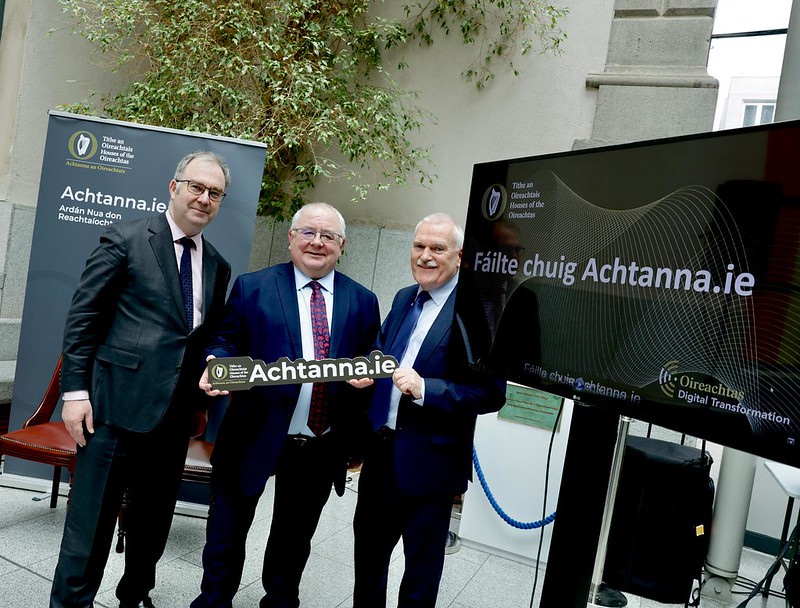
Watch
Acts of the Oireachtas on Actanna.ie
Visit the newly relaunched Achtanna.ie to see Acts of the Oireachtas and their official translations side by side. The upgraded version of the website now includes Acts from 1922 to the present.
Official translations of Acts of the Oireachtas are provided by Rannóg an Aistriúcháin and a list of recently published official translations is available on its page.

Oireachtas TV
Around the Houses | March
Take a look back at some of the main events in Leinster House from March, when the Joint Committee on Housing, Local Government and Heritage discussed efforts to combat homelessness.
Meanwhile, on International Women's Day a photo exhibition was unveiled in Leinster House celebrating women in politics, highlighting the progress made but also the need to have more women in the political sphere.
News

22 Apr 2024, 10.00

17 Apr 2024, 11.00

17 Apr 2024, 10.00
Press releases
24 Apr 2024, 16:45
Seanad Public Consultation Committee holds third public hearing on the Future of Local Democracy
24 Apr 2024, 15:15
Committee of Public Accounts to examine 2022 Financial Statements of Inland Fisheries Ireland
24 Apr 2024, 14:30
Joint Committee on Public Petitions and the Ombudsmen to discuss petition regarding ‘Kiltimagh Water Scheme’
24 Apr 2024, 11:52
Joint Committee on Transport and Communications to meet for discussion on issues relating to road safety and separately to discuss issues affecting Driver Testers
23 Apr 2024, 15:34
Social Protection Committee to discuss the impact of means testing on the social welfare system with representatives from UCC, TCD and SETU
Recently considered Bills and Acts
25 Apr 2024
Before Dáil Éireann
Defence (Amendment) Bill 2024
No. 29 of 2024
25 Apr 2024
Before Dáil Éireann
Health (Waiting Lists) Bill 2024
No. 30 of 2024
24 Apr 2024
Before Seanad Éireann
Court Proceedings (Delays) Bill 2023
No. 17 of 2023
24 Apr 2024
Before Dáil Éireann
Gas (Amendment) Bill 2023
No. 64 of 2023

Leinster House
Ireland: a parliamentary democracy
Ireland is a parliamentary democracy. The National Parliament (Oireachtas) consists of the President and two Houses: Dáil Éireann (House of Representatives) and Seanad Éireann (the Senate) whose functions and powers derive from the Constitution of Ireland enacted by the people on 1 July 1937. The Houses of the Oireachtas are situated at Leinster House, Dublin.
Subscribe to any of the options below and receive weekly and daily schedules from Dáil Éireann, Seanad Éireann and Committees, directly to your email.
To complete the subscription process, please click the link in the email we just sent you.
To unsubscribe at any time, simply click the unsubscribe link at the bottom of any email sent to you.