30 Sep 2026, 13:07
The Committee on Budgetary Oversight has today, Wednesday September 30th, published its Pre-Budget 2027 report, warning that fiscal policy must avoid adding to inflationary pressures, that repeated spending overruns undermine transparency, and that Ireland’s reliance on concentrated corporation tax receipts creates serious risk for the public finances. It also calls for a broader tax base, a credible domestic fiscal rule, and more multi-annual budgeting.
Read the report and its recommendations in full here and on the Committee's webpage.
The report examines the Government’s proposed Budget 2027 package of €8.5 billion, comprising €1.5 billion in permanent new tax measures and €7 billion in additional public spending. The report further considers the projected underlying deficit, the sustainability of current expenditure, the role of savings funds and the longer-term spending pressures associated with demographic change, climate action and infrastructure investment.
The report highlights concern about repeated year-on-year spending overruns, including cases where original estimates did not reflect likely expenditure pressures, and says future budget figures must be more transparent and credible.
The report notes the strong performance of the Irish economy but warns that Ireland’s corporation tax base has become increasingly concentrated and that current spending should not become dependent on receipts that may be transitory or vulnerable to external shocks.
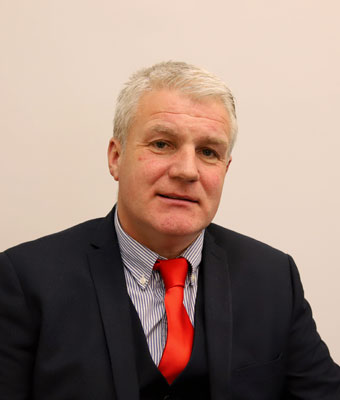
Speaking on the launch of the report, Committee Cathaoirleach Deputy Richard O’Donoghue, said:
“Budget 2027 must be grounded in realism and transparency. We need to protect the public finances, avoid adding to inflationary pressures and make sure that spending decisions are based on credible figures and sustainable revenues.”
“The Committee’s Pre-Budget scrutiny is an important part of the Oireachtas budgetary cycle and provides an opportunity for the Committee to examine the economic and fiscal outlook ahead of Budget Day.”
“The Committee believes Budget 2027 should seek to provide meaningful support to those most affected by persistent energy and fuel costs. While maintaining prudent fiscal management must remain a priority, the Government should also ensure that the benefits of economic growth are used to support workers, families and businesses facing genuine financial pressures.”
Some of the report’s 15 recommendations are outlined below:
• Departments should publish annual and multi-annual expenditure projections based on demographic pressures, pay demands, the cost of maintaining existing services and achievable efficiencies.
• Greater transparency where Supplementary Estimates arise, including an explanation of why the original allocation proved insufficient;
• The Government should publish a medium-term plan for broadening the tax base;
• The publication of a credible domestic fiscal rule to limit net spending to a sustainable growth rate over the medium to long term;
• Contributions to the Future Ireland Fund and Infrastructure, Climate and Nature Fund should come from genuine fiscal surpluses rather than borrowing;
• A rules-based framework for the regular indexation of income tax bands and credits and core social welfare payments;
• The Irish Fiscal Advisory Council be given a statutory right to obtain timely and granular public expenditure information; and
• Consideration of moving from annual budgeting towards a multi-year budgeting process.
The Committee held a series of engagements with the Tánaiste and Minister for Finance Simon Harris TD, the Minister for Public Expenditure, Infrastructure, Public Service Reform and Digitalisation Jack Chambers TD, the Irish Fiscal Advisory Council, the Central Bank of Ireland, the Economic and Social Research Institute, the Nevin Economic Research Institute and Social Justice Ireland. The Committee also considered submissions and publications and received support from the Parliamentary Budget Office.
Media enquiries
Áine McMahon
Houses of the Oireachtas
Communications Unit
Leinster House
Dublin 2
+353 (0) 1 618 4643
+353 (0) 85 800 7312
aine.mcmahon@oireachtas.ie
pressoffice@oireachtas.ie
Twitter: @OireachtasNews